York County · Pennsylvania
Radon Fan Replacement in York, PA
The manometer tells you: both legs reading equal means no pressure difference — dead fan, blocked pipe, or a tripped circuit. Fans also grow loud or start rattling as bearings wear. Either way, retest immediately; the house is unprotected until the system runs again.
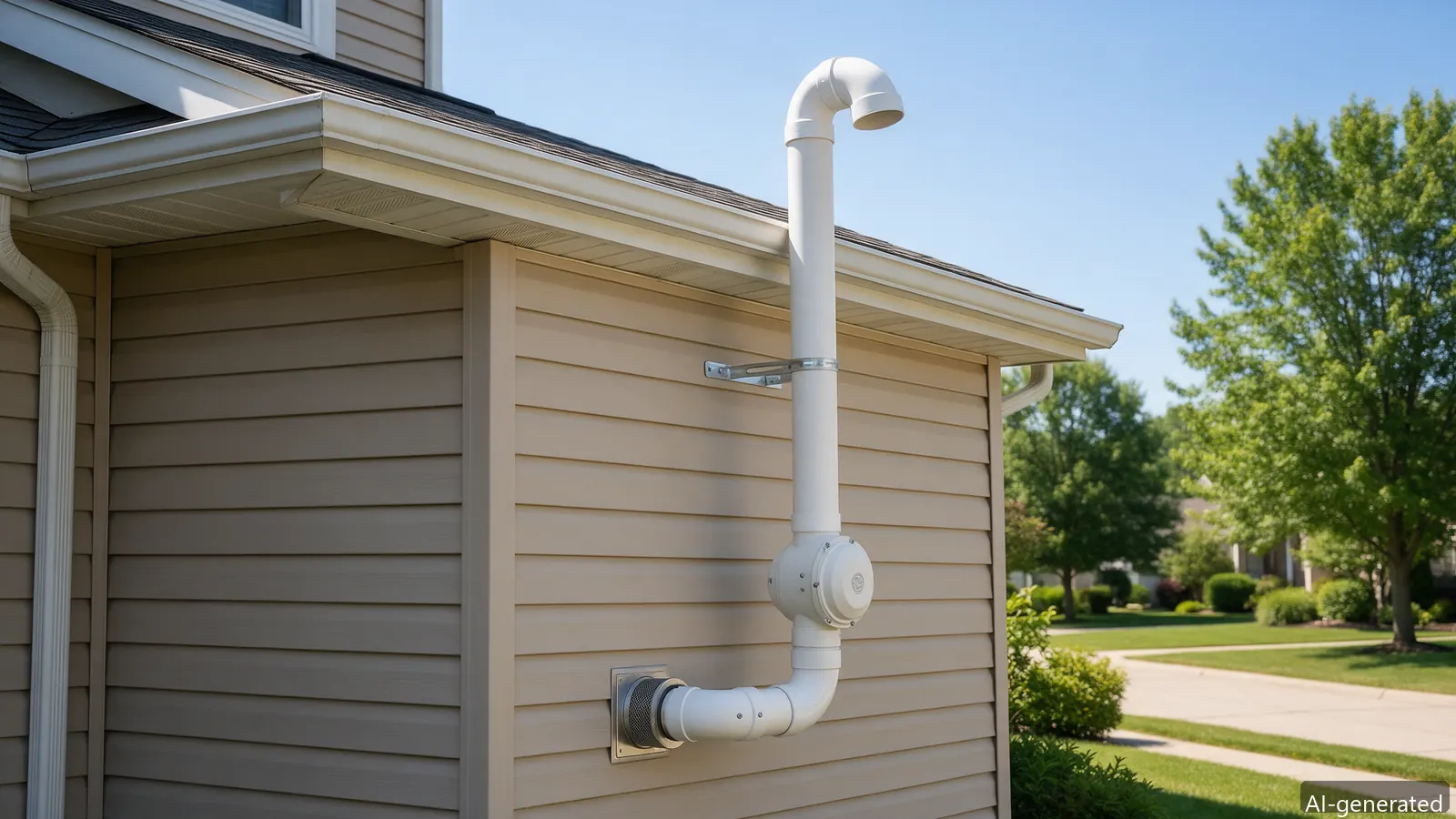
On an existing, correctly sized system it is a short service call: cut the old fan from the rubber couplings, verify the system’s design point against the sub-slab data, install the matched replacement, and confirm the manometer returns to its normal reading. A post-replacement test closes the file. Pennsylvania law requires a DEP-certified person for the work when done for pay.
PA DEP: most fans carry a five-year manufacturer’s warranty and typically last much longer. Keep the original installer’s paperwork — it documents the fan model the replacement must match.
The U-tube gauge is the system’s only voice. A working system shows one leg visibly higher — the specific reading varies with sub-slab material, but it reads qualitatively: a difference means suction, equal legs mean silence. Check it monthly and after power events; PA DEP’s operating guidance treats the gauge check as the homeowner’s core duty between two-year retests. Winter is when a stalled fan hurts most — house-closed stack effect pulls hardest exactly when a dead fan stops intercepting it — so a mid-winter check is worth two summer ones.
Fan families divide by suction against flow, and the original installer’s diagnostic — the sub-slab communication test — decided which family your system needed. Swapping in whatever model the hardware aisle stocks can leave a tight-clay sub-slab under-served: the gauge reads a modest difference while the basement tests unchanged. The replacement call is therefore a measurement call, which is why Pennsylvania routes paid replacements through DEP-certified installers; a homeowner can legally do the wrench work on their own house but inherits the sizing risk the certification exists to retire.
Most fans carry a five-year manufacturer warranty and typically last much longer (PA DEP). When one dies inside that window, the original installer’s paperwork — model, install date, system label photo — is the claim. Installers who labeled and documented the system at year zero make year-six replacements a same-week invoice instead of a debate. The retest after any swap re-anchors the file at below 4.0 pCi/L, which is what a future buyer’s inspection will ask to see.
The manometer: both legs equal means no pressure difference — dead fan, blocked pipe, or tripped circuit. Retest immediately.
PA DEP: most fans carry a five-year manufacturer’s warranty and will typically last much longer.
Mechanically straightforward, but Pennsylvania requires DEP certification for work done for pay, and sizing matters — an undersized fan can leave the home above 4.0 pCi/L.
Ice or debris in the fan housing, worn bearings, or a loosened duct section. Loud fans often still work, but they fail soon after; schedule the swap rather than waiting for silence.
Yes — radon entry is highest in winter (stack effect, frozen ground, closed houses). The system runs continuously by design; shutting it off seasonally re-exposes the house exactly when levels peak.
Check the manometer monthly: the two legs should differ by a clear margin — equal legs mean a dead fan or blocked pipe. Fans carry a five-year manufacturer’s warranty and typically last much longer (PA DEP). Retest every two years, as the state recommends.