York County · Pennsylvania
Radon Mitigation Systems in York, PA
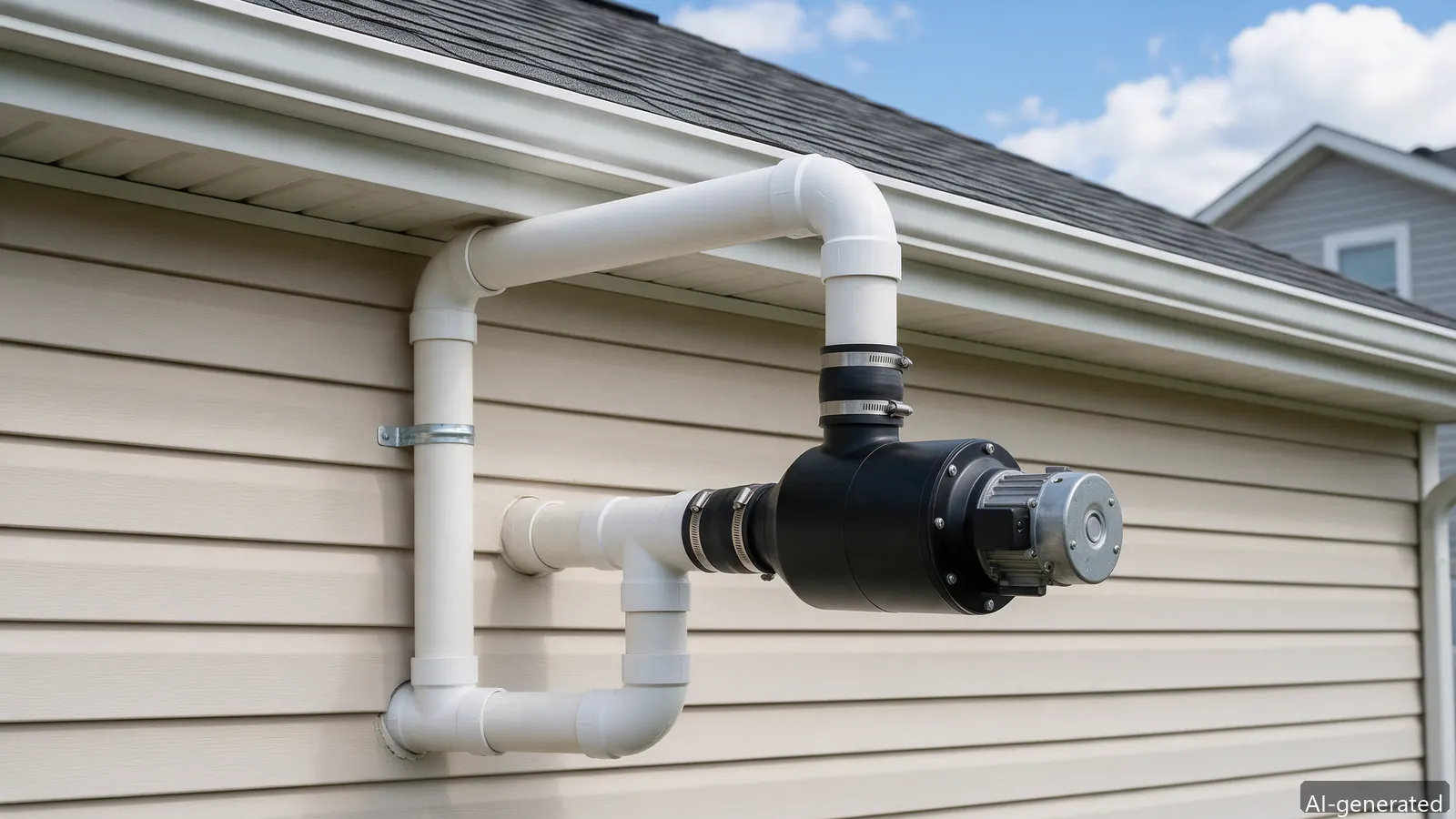
More than 99% of radon systems installed in Pennsylvania are sub-slab depressurization (PA DEP). Here is how the system works, how the fan gets selected for your sub-slab material, and what Pennsylvania’s standards — among the strictest in the country — require of every installation.
Radon moves from decayed radium in bedrock and soil into the air beneath your house, and the house — warm, leaky at the top — pulls it in through every slab crack, sump pit, crawl-space floor and penetration like a chimney in reverse. Sealing alone cannot win because the soil keeps supplying. The system changes the physics: it gives the soil gas an easier exit than your basement floor.
The installer cores a small test hole through the slab and measures sub-slab pressure and airflow (a communication check). This single hour decides everything: suction-point location, fan family, whether one point suffices or two are needed, and whether a drain-tile loop or sump conversion beats a fresh core. PA DEP’s parametric studies found communication testing changes system design in a large share of homes — skipping it is how undersized systems happen.
A 5–8 inch hole is cored at the chosen spot — usually the basement slab’s most central, most communicative quadrant — and a 6–12 gallon pit is hand-dug beneath it to enlarge the collection area. Homes with an open sump or a builder’s passive pipe often convert those instead, at lower cost.
Sealed 3–4 inch PVC runs from the pit to the fan and from the fan to discharge above the roofline or eave, away from windows. The fan is selected from the sub-slab data — not guesswork:
| Fan family | Character | Matched to | Installed price |
|---|---|---|---|
| Low-suction, high-flow | Moves a lot of air at modest pressure | Sand or loose gravel under the slab, good communication | |
| Mid-range | The default family for mixed fills | Typical basement slabs, standard runs | |
| High-suction | Pulls hard against resistance | Clay-rich or tightly packed fill, poor communication, longer runs |
The sump gets a gasketed lid, slab cracks and the slab perimeter get sealed, a U-tube manometer shows the system is pulling, and a label with the installer’s DEP certification number goes on the pipe. Pennsylvania standards (25 Pa. Code and DEP mitigation guidance) require the warning device, the label, the discharge height and a post-mitigation test — a bid missing any of them is incomplete.
The follow-up test starts at least 24 hours after fan startup; results confirm the home is below 4.0 pCi/L (typically 0.5–2.0). DEP recommends retesting every two years. Keep the paperwork — real-estate buyers and insurers both ask for it.
Soil gas under the house is one radon source. Well water is another — showers and dishwashers aerosolize dissolved radon (USGS found 87% of sampled PA groundwater wells above 300 pCi/L). If your water tests high, the water needs treatment too.
PA DEP guidance and 2026 installed prices.
What a compliant system costs →The method behind more than 99% of installed systems (PA DEP). A fan pulls soil gas from the gravel or fill beneath your slab through a sealed pipe and discharges it above the roofline, where it dilutes to background. The house becomes a negative-pressure zone relative to the soil, so radon stops entering.
Well-designed systems reduce radon by 80–99% (EPA). A home testing at 12 pCi/L typically drops to 0.5–2.0 pCi/L. The post-mitigation test — at least 24 hours after fan startup — is the proof, and DEP requires mitigators to recommend one.
Fan size follows the sub-slab material, not the house size. Loose gravel communicates well and needs a small fan; clay-rich or tightly packed fill needs high suction and sometimes two points. The diagnostic test hole decides.
Check the manometer monthly: the two legs should differ by a clear margin — equal legs mean a dead fan or blocked pipe. Fans carry a five-year manufacturer’s warranty and typically last much longer (PA DEP). Retest every two years, as the state recommends.
A standard single-point system installs in 3–5 hours. Crawl-space membranes, two-point systems or complex pipe routes run a full day. The post-mitigation test starts at least 24 hours after the fan turns on.
Interior runs through a closet or garage with an attic fan disappear almost completely. Exterior runs up a back wall are painted to match. Fan placement rules (distance from windows, discharge height) constrain the options; a good installer walks you through them before drilling.