York County · Pennsylvania
Radon Questions, Answered
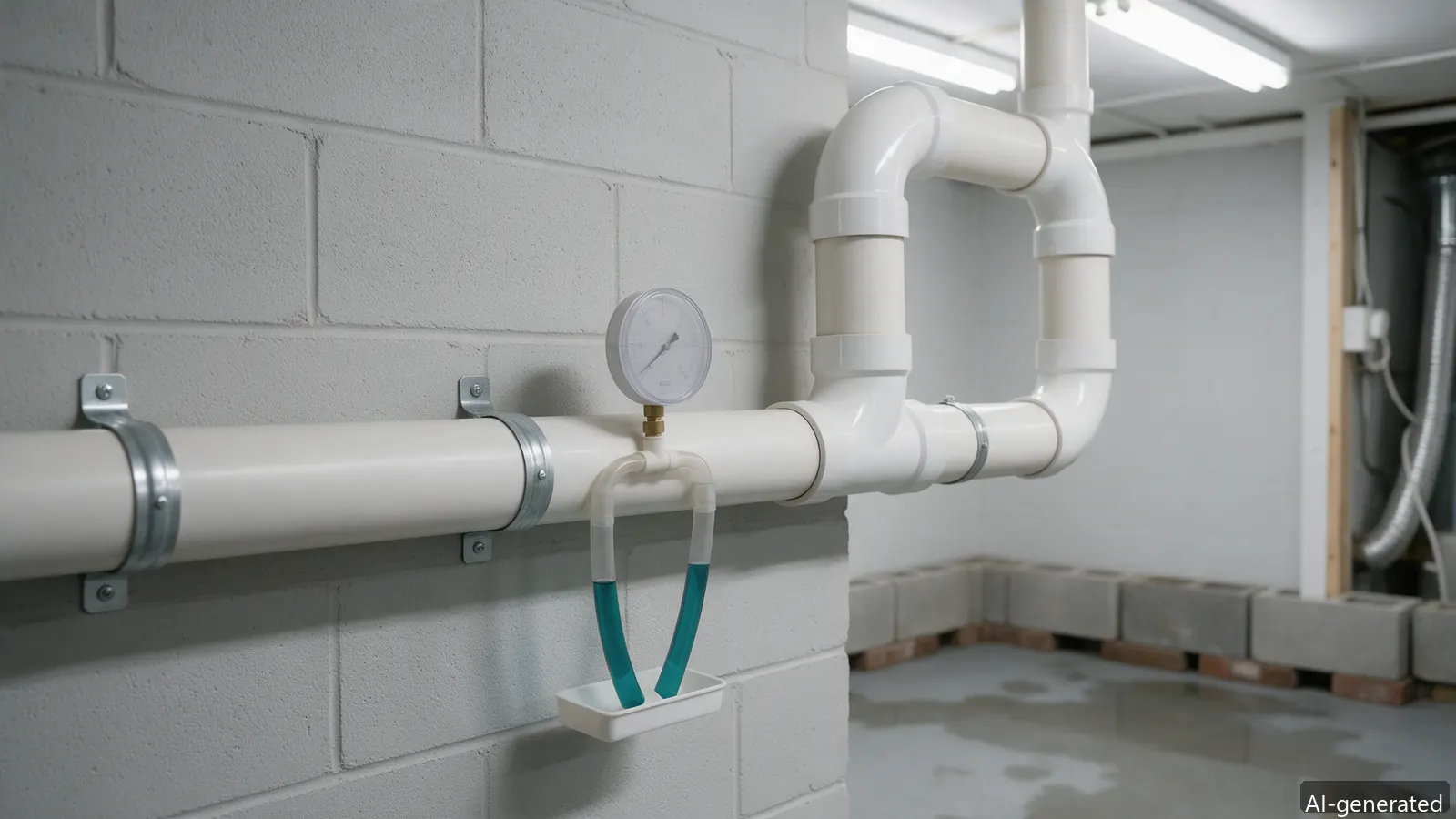
The questions York County homeowners actually ask — answered with the source named, from PA DEP’s certification regulations to EPA’s risk tables. No fluff, no fear-selling.
Pennsylvania has required DEP certification for radon work since 1988 under the Radon Certification Act and 25 Pa. Code Chapter 240 — course, exam, experience for individuals; a certified individual in responsible charge for firms. Verify any mitigator in the DEP Radon Services Directory.
Sub-slab depressurization handles 99%+ of cases; fan families (low/mid/high suction) get selected from the sub-slab diagnostic, and a U-tube manometer tells you the system is alive. Fans carry a five-year manufacturer’s warranty and typically last much longer (PA DEP).
EPA: ~21,000 U.S. lung-cancer deaths/year, second only to smoking, first among never-smokers. WHO: 3–14% of lung cancers; risk +16% per 100 Bq/m³; reference level 2.7 pCi/L. EPA’s action guideline: 4.0 pCi/L.
EPA Zone 1 county; ~56% of basement tests at/above 4.0 (PA DEP records); three geologic belts — carbonate valley, Peach Bottom slate, Triassic uplands — feed it, and USGS found 87% of sampled PA groundwater wells above 300 pCi/L dissolved radon.
Yes — and it is one of the strictest states about it. The Radon Certification Act and 25 Pa. Code Chapter 240 require anyone testing or mitigating radon for the public to hold PA DEP certification. Certification has been mandatory since 1988.
Ask for the certification number on the written quote and look it up in the PA DEP Radon Services Directory (published monthly, alphabetical by name and county). Certification numbers are printed on every quote and system label.
Under 25 Pa. Code § 240.112: a DEP-approved course, a DEP-approved exam, and one year of professional installation experience (or three years in a related trade). Firms must employ a certified individual in responsible charge, and firm employees need documented initial training plus continuing education every two years.
Yes — the certification law covers work done for pay; homeowners may mitigate their own residence. Practically, the system must actually depressurize the slab, which is where DIY installs most often fall short: a fan and pipe that move little air accomplish little.
PA DEP’s radon mitigation standards (25 Pa. Code and DEP mitigation guidance): discharge above the roofline or eave, away from windows, sealed sump, system label with the certifier’s number, a visible warning device, and a post-mitigation test. Any bid missing those items is incomplete.
The manometer: both legs reading equal means no pressure difference — dead fan, blocked pipe, or a tripped circuit. Fans also get loud or start rattling as bearings wear. Either way, retest immediately; the house is unprotected until it is fixed.
PA DEP: most fans carry a five-year manufacturer’s warranty and will typically last much longer. Replacement on an existing, correctly sized system is a short service call.
EPA attributes about 21,000 U.S. lung-cancer deaths a year to radon — the second cause after smoking and the first among never-smokers (~2,900 deaths/year). WHO estimates 3–14% of all lung cancers. Risk rises roughly 16% per 100 Bq/m³ of long-term exposure (WHO pooling studies).
No level is zero-risk. EPA’s action guideline is 4.0 pCi/L; WHO recommends acting at 2.7 pCi/L (100 Bq/m³) and set 300 Bq/m³ as the absolute maximum national reference. At 4.0 pCi/L, EPA’s tables project ~62 lung cancers per 1,000 smokers and ~7 per 1,000 never-smokers over a lifetime.
Within weeks, not years: confirm the result, get a certified mitigator’s quote, and install. Lung-cancer risk builds over years of exposure — which is exactly why starting now, not after the next heating season, matters.
Three rock belts under the county (PA Geological Survey): the carbonate York Valley — limestone and dolomite with karst voids and soil-filled fracture zones that breathe; the Peach Bottom slate belt in the south, a historic uranium-grade slate district; and the northern uplands on Triassic-age New Oxford Formation sandstones and red beds. Radium-bearing minerals in all three decay to radon gas.
Both matter. The rock sets the supply; the house sets the entry: unventilated stone foundations, slab cracks, sump pits, crawl spaces and the stack effect pull soil gas in. Two houses on the same street routinely test 2 vs 20 pCi/L.