York County · Pennsylvania
Radon Testing in York, PA
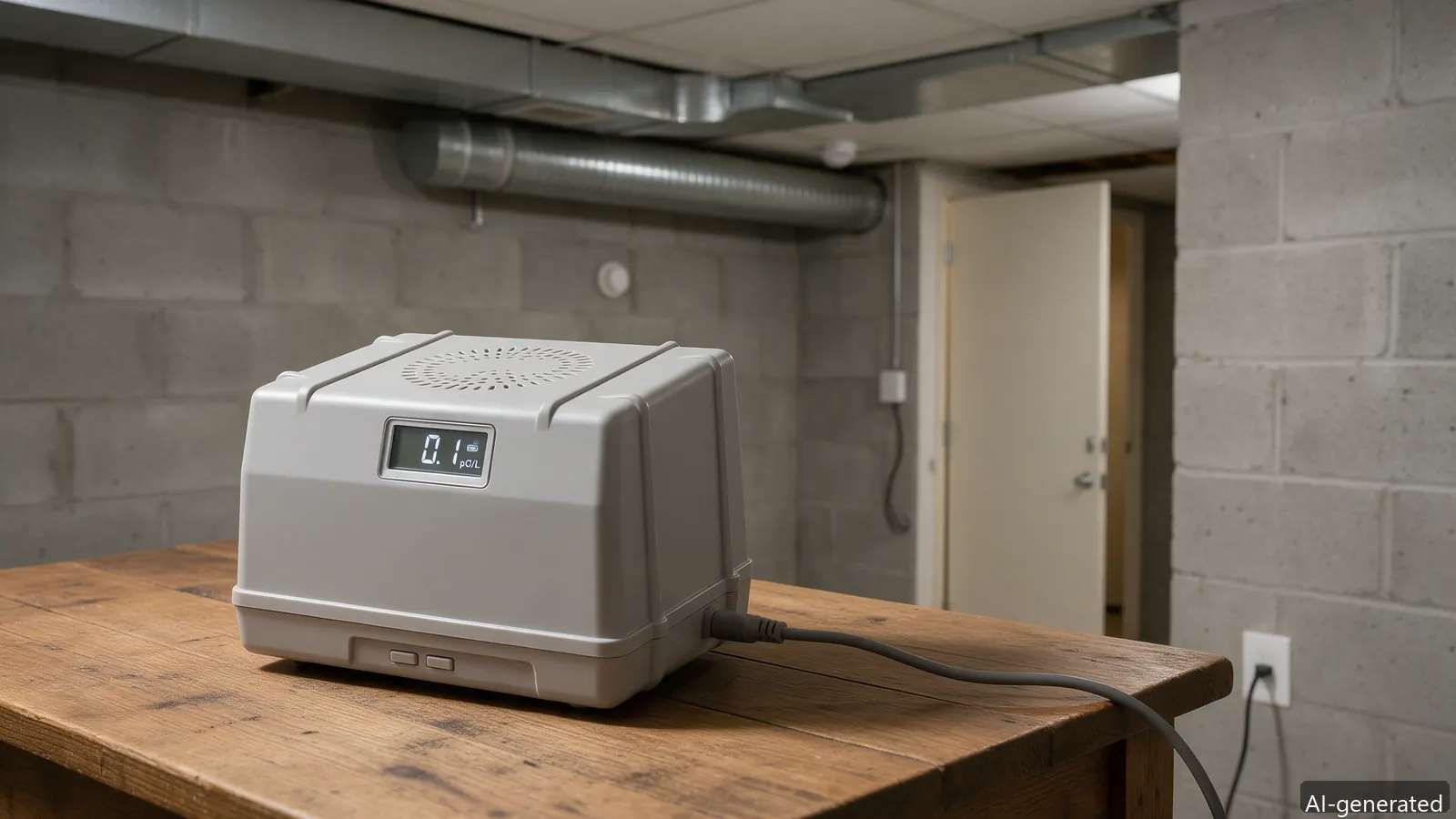
With 56% of York County basement tests at or above 4.0 pCi/L (PA DEP records), the only question your house answers is how much above — and the test decides. Here is how testing works, what it costs, and what the number means.
| Option | Cost | Time | Best for |
|---|---|---|---|
| DIY kit (charcoal canister / track-etch) | $10–$30 | 2–7 days short-term; 90+ days long-term | First look; annual retests; any homeowner |
| Professional continuous radon monitor (CRM) | $150–$300 | 48–72 h, hour-by-hour data | Real-estate deadlines; verifying protocol; borderline results |
| Long-term device (alpha-track) | $20–$40 | 90–365 days | Annual-average picture; confirming borderline results |
EPA’s action guideline is 4.0 pCi/L; between 2 and 4, EPA says “consider fixing.” WHO’s reference level is 2.7 pCi/L (100 Bq/m³). A confirmed 4–8 reading deserves a second test or a long-term device; anything confirmed above 4.0 in a York County basement — where the county average already sits near 10 pCi/L by DEP records — should move straight to mitigation planning. Remember: your neighbor’s 2 pCi/L predicts nothing about your basement; soil gas varies house to house.
Every two years (PA DEP recommendation), after major renovations or HVAC changes, after finishing a basement, and after any mitigation system install. Post-mitigation tests start 24+ hours after the fan turns on.
Two routes: a DIY kit ($10–$30, hardware store or online lab, 2–7 day charcoal or 90+ day track-et device) or a professional test with a continuous radon monitor ($150–$300, hour-by-hour data, tamper-resistant, results the same day the device comes out). Keep the house closed for 12 hours before and during a short-term test.
The lowest lived-in level — usually the basement. Not the kitchen, bathroom, or near windows, doors, exterior walls or drafts. PA DEP test records show basements read highest, and EPA’s action guideline is compared against that lowest-level reading.
Confirm it (a second short-term test or a long-term average), then plan mitigation — EPA’s guideline is 4.0 pCi/L, and WHO’s reference level is 2.7 pCi/L (100 Bq/m³). Between 4 and 8, DEP suggests confirming; at any confirmed level above 4, install a system.
When bought from a listed lab, kept closed-house, and analyzed promptly, yes — they are the backbone of Pennsylvania’s 40%-above-4.0 dataset. Their weakness is protocol: mishandling and closed-house violations skew results. A continuous monitor removes most human error.
Every two years, after any major renovation, after HVAC changes, and after occupancy changes in finished basements. Post-mitigation: once at 24+ hours after startup, then on the two-year cycle.