York County · Pennsylvania
Radon in Well Water — York County, PA
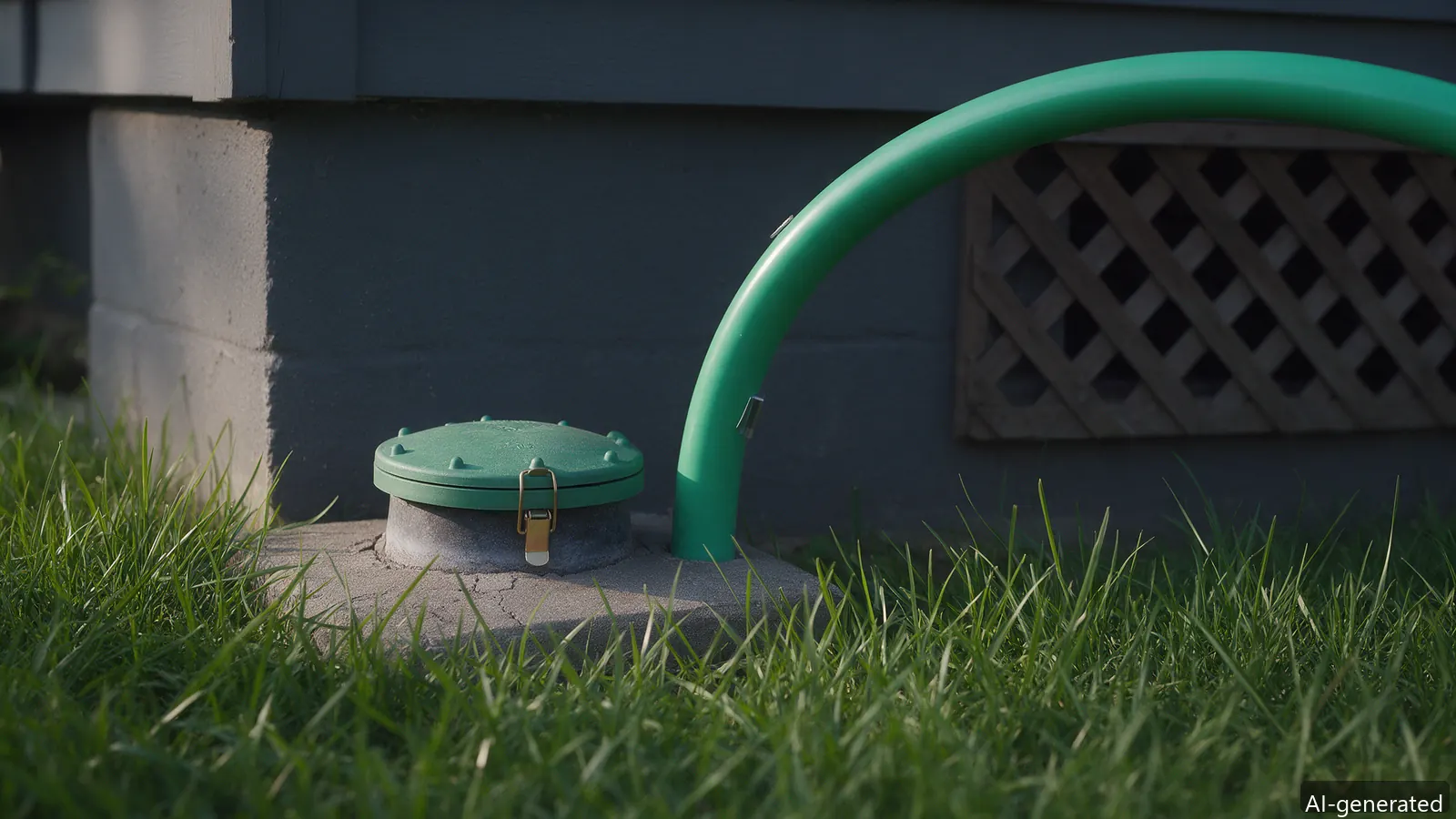
A soil-depressurization system fixes the air. It does nothing for radon dissolved in well water — which USGS found in 87% of sampled Pennsylvania groundwater wells above 300 pCi/L, with the highest readings in this region’s Piedmont schists and gneisses. Showers, dishwashers and washing machines aerosolize it into the air you breathe.
Radon dissolves in groundwater like CO₂ in soda. Ingestion risk exists, but the dominant exposure is inhalation: a 10-minute shower aerosolizes water into droplets that release their gas into the bathroom air. USGS studies of Pennsylvania wells (including York-area schist and gneiss aquifers) show dissolved radon running from hundreds to tens of thousands of pCi/L.
A dedicated water test (not the air test) through a PA DEP-certified laboratory: sample at the well or pressure tank, results in days. If your well also serves drinking water, test bacteria, nitrate and arsenic in the same pass — Pennsylvania private wells are unregulated at the state level, so the owner is the regulator.
| Technology | How it works | Cost | Notes |
|---|---|---|---|
| Aeration (spray-tray or packed-tower) | Water is sprayed through air; radon off-gasses and is vented outside | four-figure project, quoted per install | No media to replace; needs drain and vent routing; whole-house |
| Granular activated carbon (GAC) | Water passes through carbon that adsorbs radon | $1,500–$4,000 | Simpler install; carbon accumulates radioactivity and needs regulated replacement; best for low-to-mid levels |
| Point-of-entry vs point-of-use | Whole-house (POE) treats everything; under-sink (POU) treats drinking only | — | Radon exposure is inhalation-driven, so POE is the standard recommendation |
Homes with both high soil-gas radon and high water radon need both systems: sub-slab depressurization for the air, aeration or GAC for the water. Neither substitutes for the other — a point the county’s real-estate transactions regularly miss until inspection week.
Yes — USGS found 87% of sampled Pennsylvania groundwater wells exceeded 300 pCi/L of dissolved radon, with the highest readings in the Piedmont’s schists and gneisses (which ring this county). Showers and dishwashers aerosolize it; the fix is water treatment, not a soil fan.
Zone 1 = predicted average indoor screening level above 4.0 pCi/L. All of York County is Zone 1. It predicts the county, not your house — neighboring homes differ — so the test, not the map, decides.
Two routes: a DIY kit ($10–$30, hardware store or online lab, 2–7 day charcoal or 90+ day track-et device) or a professional test with a continuous radon monitor ($150–$300, hour-by-hour data, tamper-resistant, results the same day the device comes out). Keep the house closed for 12 hours before and during a short-term test.
The lowest lived-in level — usually the basement. Not the kitchen, bathroom, or near windows, doors, exterior walls or drafts. PA DEP test records show basements read highest, and EPA’s action guideline is compared against that lowest-level reading.
Most single-suction-point systems in the York area run $800–$1,500 installed. PA DEP’s own guidance puts typical installations at $800–$1,200. Crawl-space systems, homes needing a second suction point, or difficult pipe routing push toward $2,000–$3,500.
No. A typical in-line fan draws 60–100 watts — roughly $30–$100 a year depending on fan size and electricity rates — PA DEP guidance ranges the annual operating cost from $30 to over $100.