York County · Pennsylvania
Sump Pit & Crawl Space Radon Systems in York, PA
Sump pits are an open door for soil gas. The fix: a gasketed lid, and often the drain-tile loop becomes the suction path — typically $500–$1,000 as part of a system (2026 installer data). A sealed sump also serves the moisture control any basement wants.
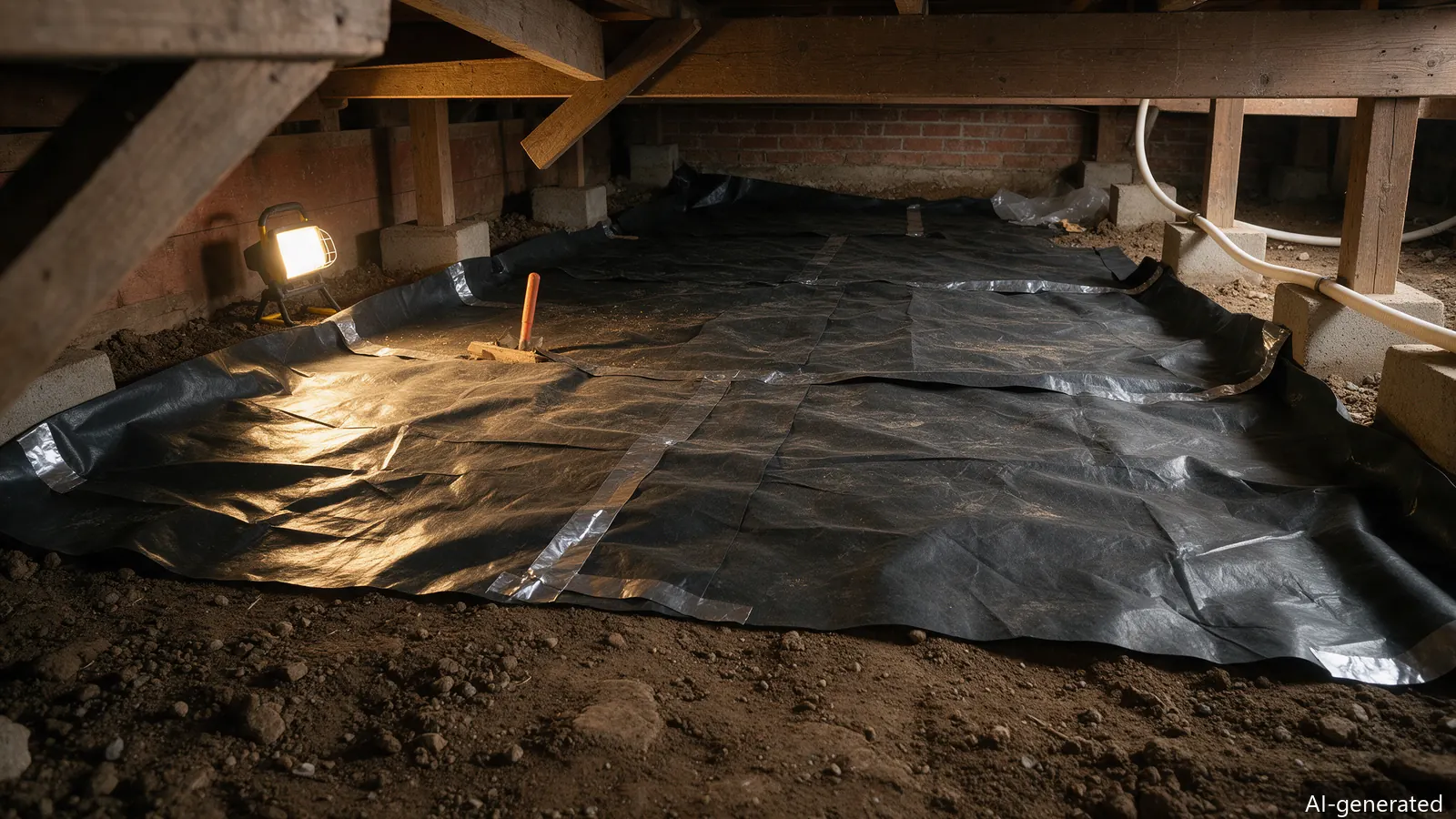
Dirt crawl spaces need a sealed membrane: heavy plastic sheeting over the soil, seams taped, piers wrapped, with suction drawn from beneath it (sub-membrane depressurization). Systems run $1,500–$3,000 (2026 installer data) depending on size and access. Ventilated crawl spaces without membrane are the county’s most common radon miss.
Each unsealed path dilutes the system’s suction. A compliant install addresses every major entry — the post-mitigation test confirms the result, not the effort.
The crawl-space sheet is engineered, not improvised: 6-mil minimum polyethylene — 10–12 where foot traffic will ever cross it — seams overlapped and taped, piers wrapped so the membrane runs continuous around each column, and edges sealed to walls with termination bars or sealant rather than gravity. The suction draw comes from a T-fitting under the sheet tied to the same fan and stack as a sub-slab system would use. Installed that way, the membrane is both the radon collection plane and the moisture barrier that stops the crawl space from humidifying the house above it — one project, two problems retired, and PA DEP’s mitigation standards cover the configuration.
An open or loosely-lidded sump undoes a sub-slab system quietly: the fan pulls hard, and the pit inhales finished-basement air instead of soil gas — the manometer reads a healthy difference while the basement tests unchanged. The compliant fix is a gasketed, bolted lid with a view port and an airtight cord grommet, turning the pit from a leak into the suction pathway the drain-tile loop already dug. Homeowners can gasket a lid any Saturday; sizing the suction path through it is the certified installer’s call.
Both conversions end the same way: the post-mitigation test starts at least 24 hours after the fan runs, and the result — not the equipment bill — is the deliverable. DEP’s guidance is a retest cycle every two years thereafter, after renovations, and whenever the gauge goes quiet. In York County’s Zone 1 ground, the two-year rhythm is not paperwork; it is the difference between a managed number and a slow surprise.
A DIY gasketed lid helps, but the system needs the suction point design to match. EPA notes sealing alone has not been shown to lower radon reliably — it supports the system, not replaces it.
$1,500–$3,000 in 2026 installer data, depending on size, membrane complexity and access.
Check the manometer monthly: the two legs should differ by a clear margin — equal legs mean a dead fan or blocked pipe. Fans carry a five-year manufacturer’s warranty and typically last much longer (PA DEP). Retest every two years, as the state recommends.
No. A soil-depressurization system treats airborne radon. If well water carries radon (common in Pennsylvania bedrock wells), that needs an aeration or granular-activated-carbon treatment system — see the well-water page.
A standard single-point system installs in 3–5 hours. Crawl-space membranes, two-point systems or complex pipe routes run a full day. The post-mitigation test starts at least 24 hours after the fan turns on.
Interior runs through a closet or garage with an attic fan disappear almost completely. Exterior runs up a back wall are painted to match. Fan placement rules (distance from windows, discharge height) constrain the options; a good installer walks you through them before drilling.